


Maker
Weyersberg Kirschbaum & Cie. WKC
Model
M1938
Inscription
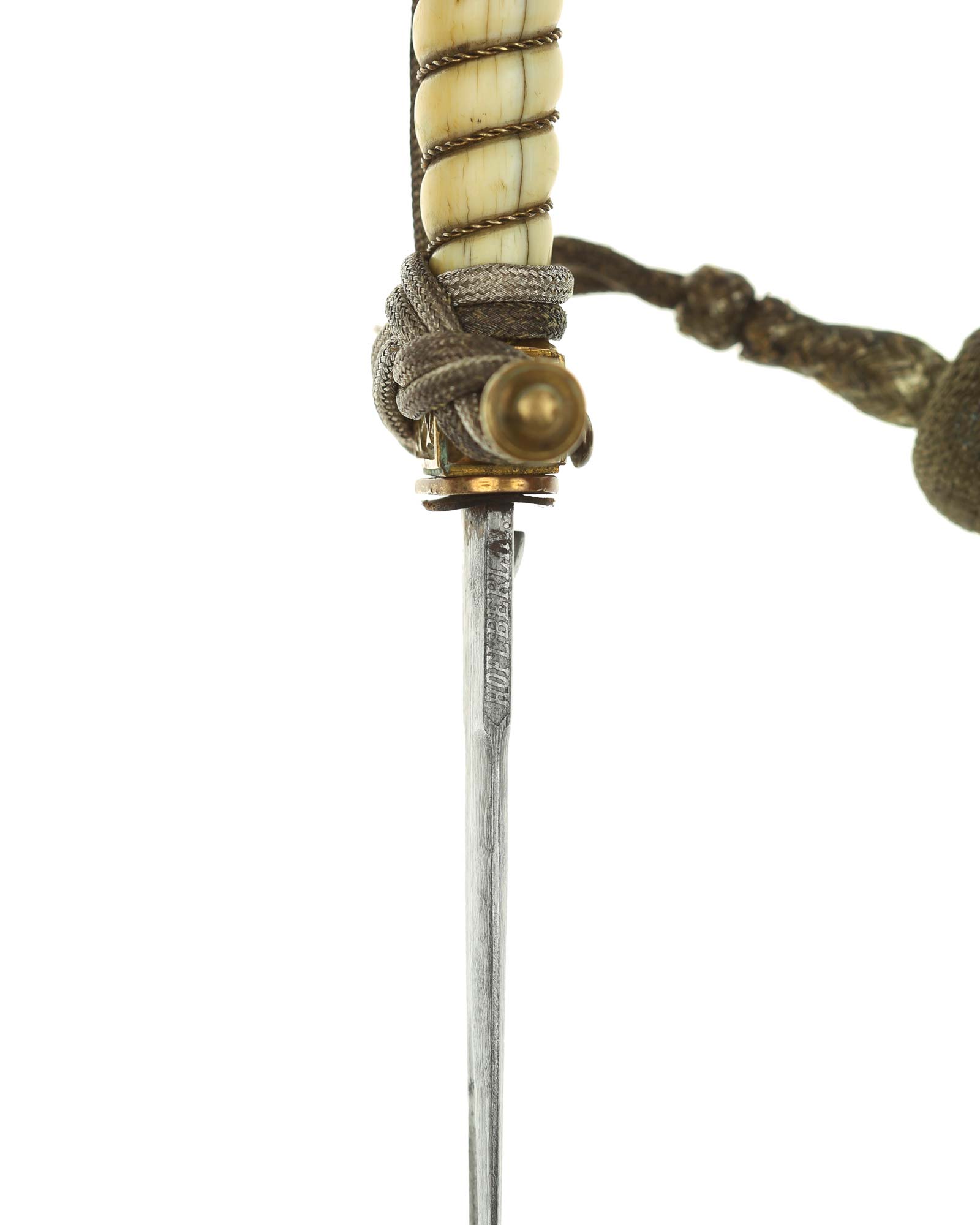
J. Robrecht Hofl. Berlin
Blade
Damascus Blade
Length
409 mm
Weight
501 g
Hanger
Two-piece buckets lined with velvet
Condition
EXC++
Navy Officer Dagger with Damascus Blade and Ivory Grip by WKC Solingen
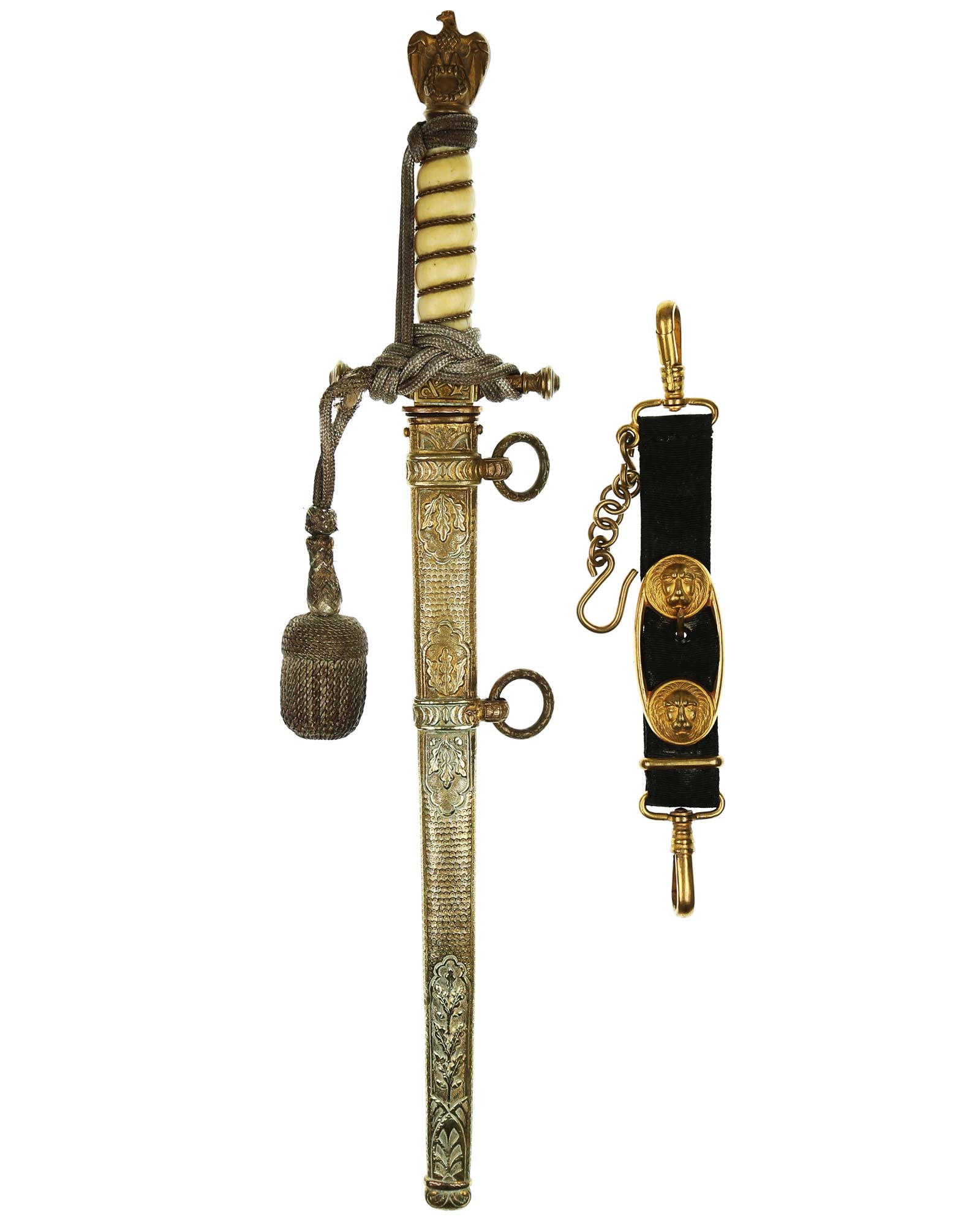
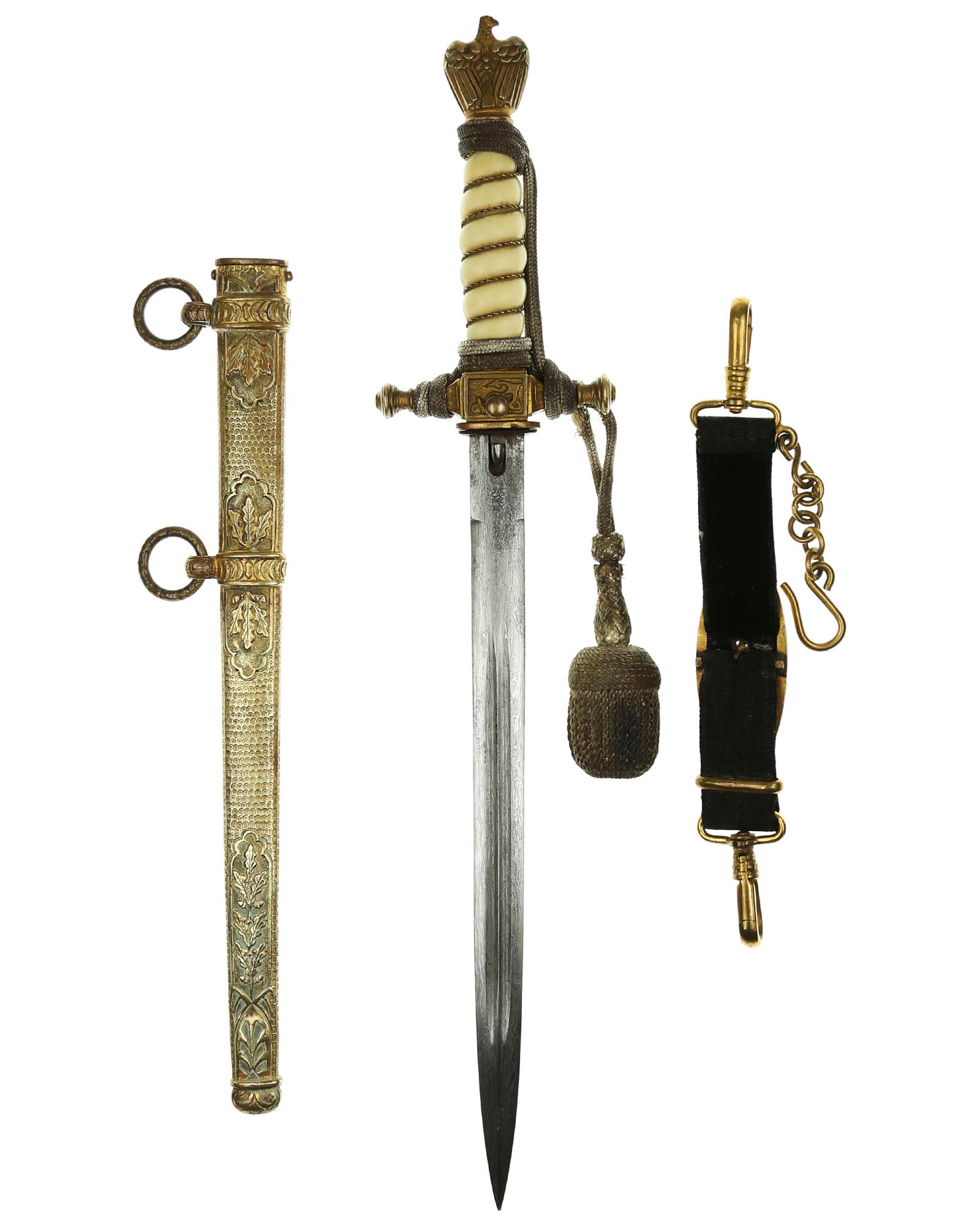
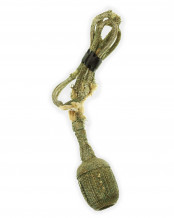
Kriegsmarine Officer’s Dagger Model 1938 in a particularly high-grade configuration with Damascus blade, ivory grip, portepee and one present hanger part. The dagger was manufactured by WKC Solingen and additionally bears the distributor etching “J. Robrecht Hofl. Berlin”. The overall length is approximately 40.9 cm. This is a rare and elaborately equipped naval dagger with decorated scabbard, gilded non-ferrous metal fittings and a very finely executed Damascus blade. The second hanger part is not present.
Grip & Fittings: Light-colored, slightly oval ivory grip with surrounding brass wire wrapping. The crossguard and pommel are made of gilded non-ferrous metal. The pommel is executed in the form of the typical national eagle, holding a wreath with swastika in its claws. Below the crossguard is the leather buffer washer. The portepee is originally tied to the dagger and complements the representative appearance of the piece.
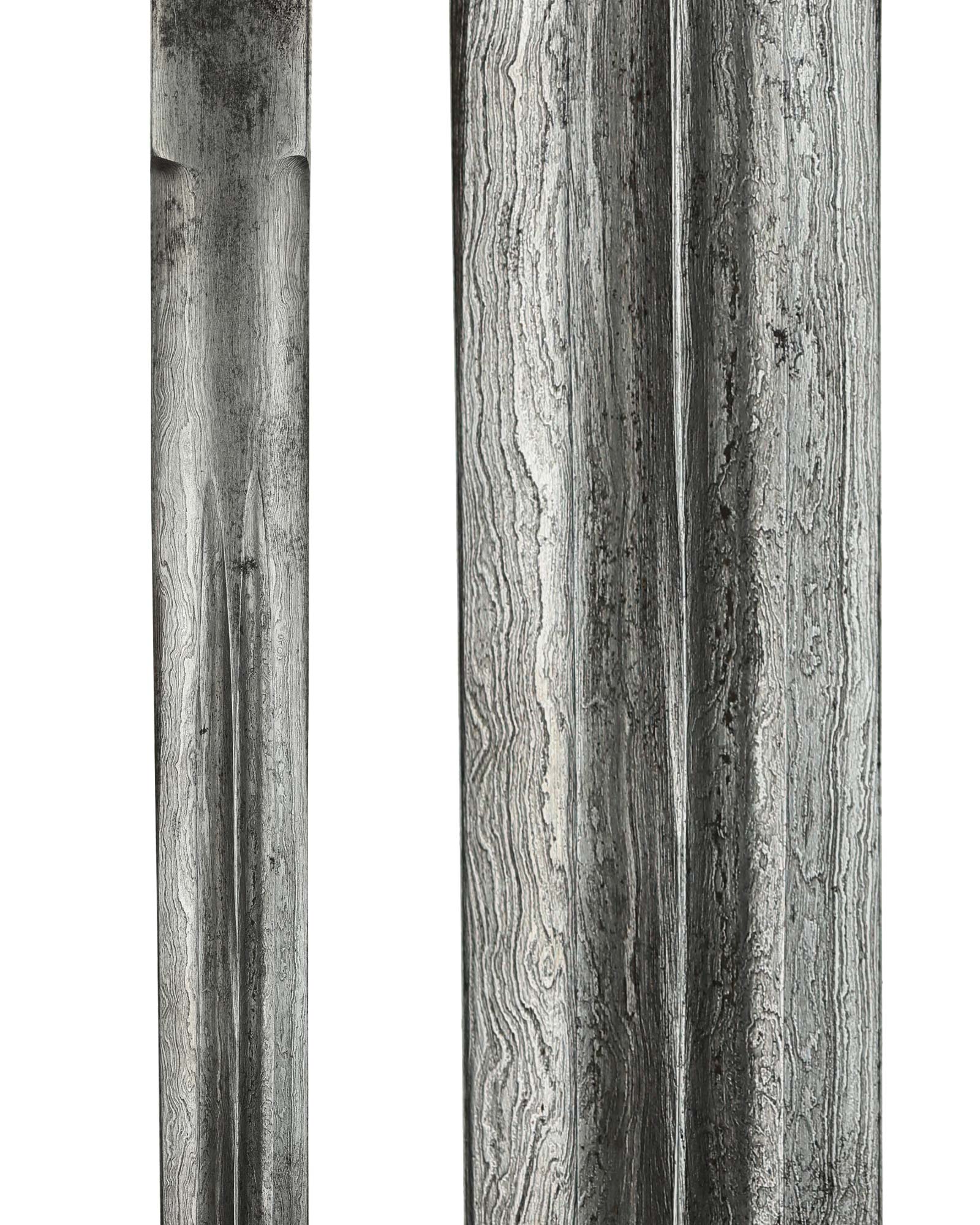
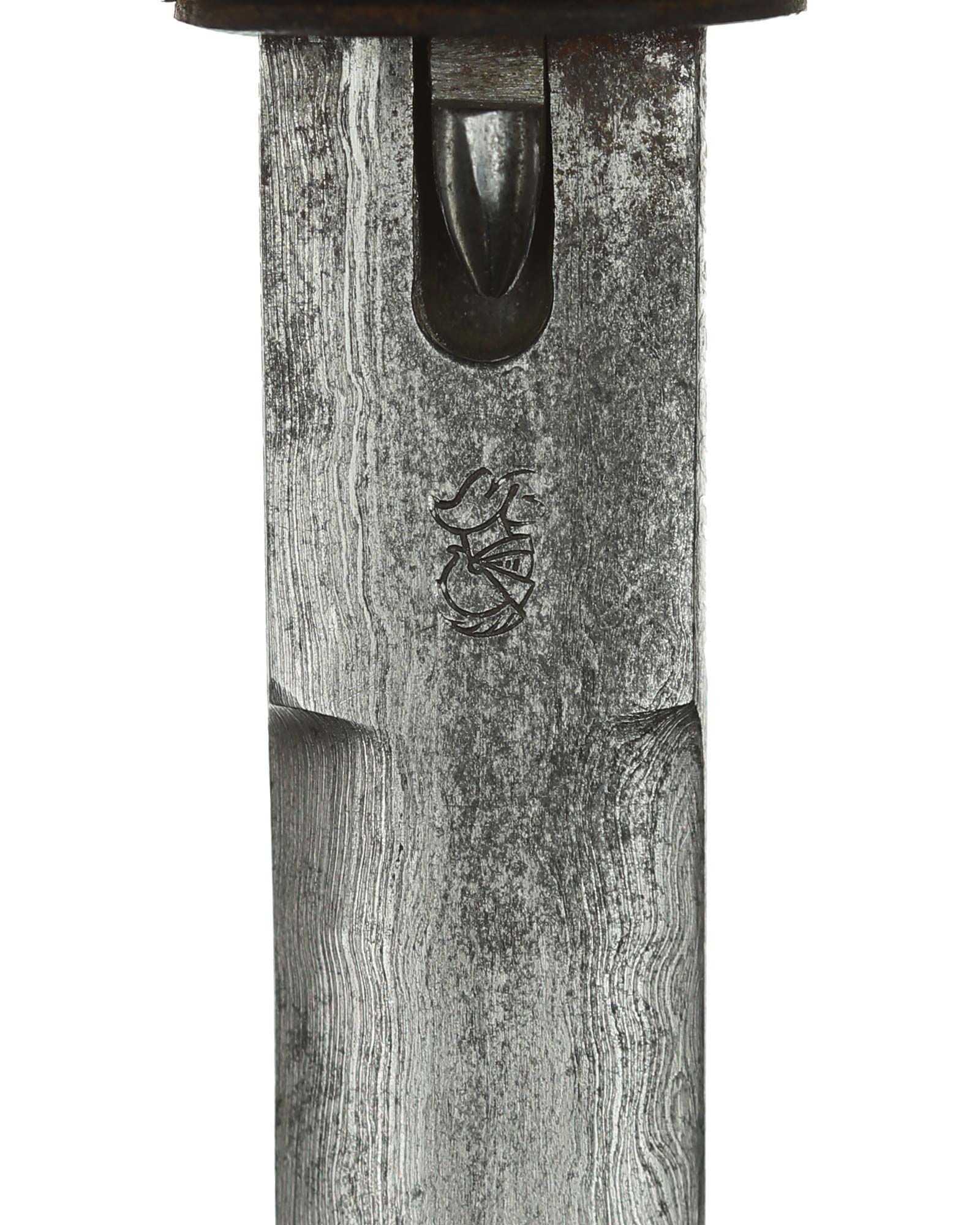
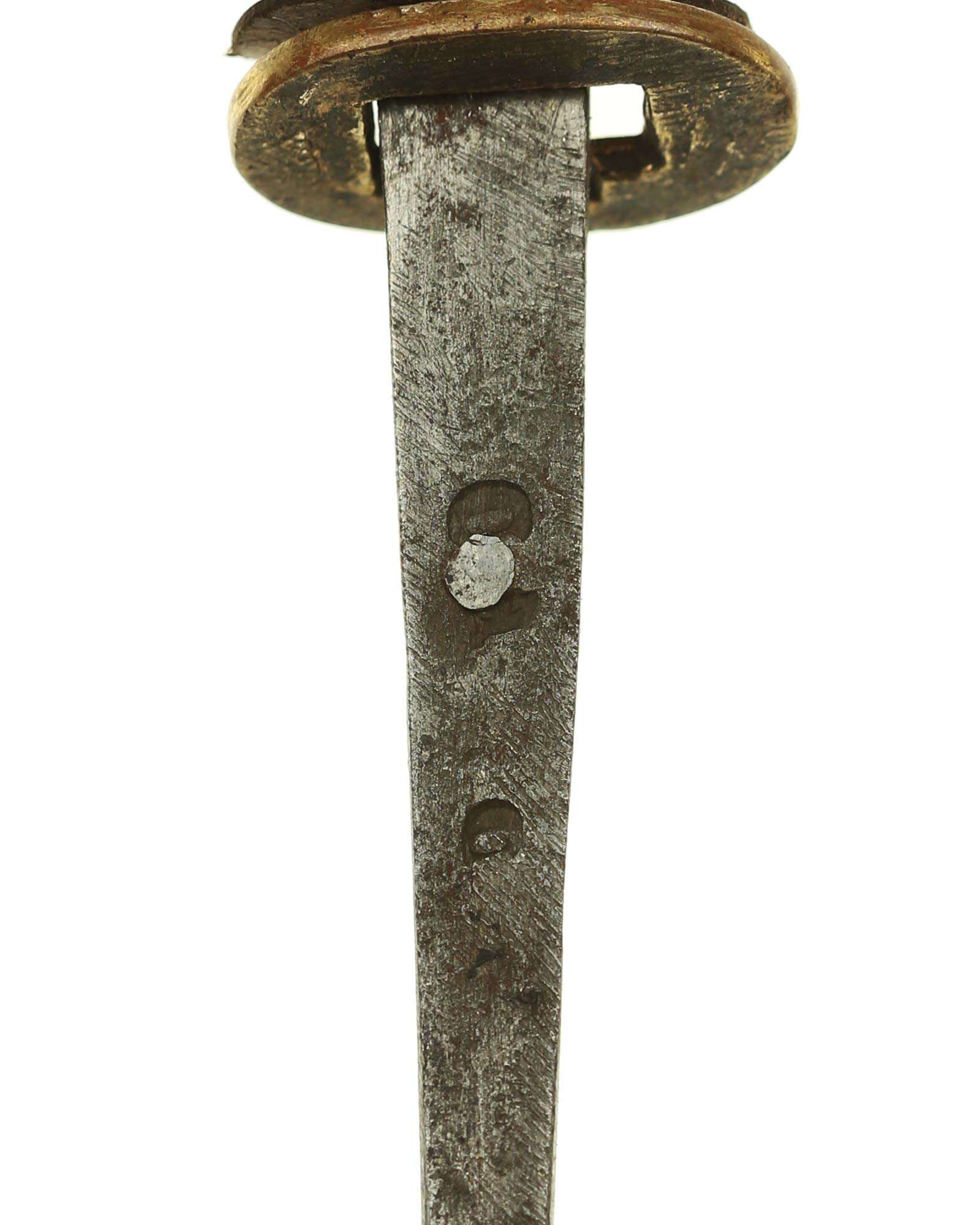
Blade: Double-edged Damascus blade with double fullers on both sides. The Damascus structure is clearly visible and gives the blade a particularly high-grade, decorative surface. The blade tang is stamped “P D”, standing for Paul Dinger Damascus steel. In addition, the works number “80” is present, matching the number on the pommel. The reverse side bears the maker mark WKC Solingen. On the side of the ricasso is the distributor etching “J. Robrecht Hofl. Berlin” for J. Robrecht, court supplier Berlin. The release button above the maker logo is intact.
Scabbard: Elaborately made, hammered and decorated scabbard in the typical configuration of the Kriegsmarine Officer’s Dagger. The scabbard has two decorated suspension bands with fully closed suspension rings. The throat piece is separately inserted and secured from the sides by two screws. The elaborate surface structure and decorative fittings underline the representative character of this naval dagger.
Hanger Part & Portepee: The dagger is offered with its originally tied portepee and one present hanger part. The hanger part corresponds to the typical configuration for the Kriegsmarine Officer’s Dagger. However, only one part of the two-piece hanger is present; the second hanger part is missing. The portepee is attached to the dagger and completes the appearance of this elaborately executed piece.
Special Features: Especially noteworthy are the combination of Damascus blade, ivory grip, WKC Solingen, distributor etching J. Robrecht Hofl. Berlin, the “P D” stamp for Paul Dinger Damascus steel and the matching works number 80 on blade tang and pommel. Together with the decorated scabbard, portepee and present hanger part, this is an exceptionally high-grade and collector-relevant piece within Kriegsmarine edged weapons. The second hanger part is not present and is therefore explicitly mentioned.
Historical Background: Kriegsmarine Officer’s Dagger Model 1938 with Damascus Blade
The Kriegsmarine Officer’s Dagger Model 1938 formed part of the representative equipment of officers of the German Navy. It was worn with the dress and parade uniform and was not intended as a combat knife, but as a rank and representation item within the naval uniform.
Characteristic features of the Kriegsmarine dagger include the light-colored grip, the eagle pommel, the curved crossguard, the decorated scabbard and the gilded fittings. Depending on maker, production period and execution, different variations occur in grip material, blade etching, scabbard structure, fittings and wearing accessories.
Damascus blades represent a particularly elaborate special execution on Kriegsmarine daggers. Through the structured steel surface and the decorative effect of the Damascus pattern, such blades stand out clearly from regular standard blades. They were mainly used for high-grade versions, presentation pieces or especially representative daggers.
WKC Solingen was among the well-known Solingen manufacturers of German edged weapons. The additional distributor etching J. Robrecht Hofl. Berlin documents the distribution route through a Berlin court supplier. The “P D” stamp on the blade tang refers to Paul Dinger and is a particularly interesting technical detail in connection with Damascus blades.
Together with ivory grip, Damascus blade, maker and distributor markings, matching works number, decorated scabbard, portepee and one present hanger part, this piece represents an exceptionally high-grade version of the Kriegsmarine Officer’s Dagger Model 1938. The missing second hanger part is explicitly taken into account in the description.
Review(s)
![Navy Officer Dagger [2nd Model] by Carl Eickhorn Solingen](https://www.dg.de/media/images/product/thumb/kriegsmarine-offiziersdolch-dagger-1938-carl-eickhorn-solingen-4106-1.jpg)
![German Naval Dagger [1st Model - M1929] by E. & F. Hörster Solingen](https://www.dg.de/media/images/product/thumb/reichsmarine-dolch-offiziere-1929-ef-hoerster-solingen-3773-2-1.jpg)


 Exclusive offers 10 € voucher when you sign up to our newsletter.


