

Model
18th century
Blade
single-edged
Length
1010 mm
Weight
1276 g
Condition
EXC+
Persian Shamshir Sabre from the 18th Century with Etching
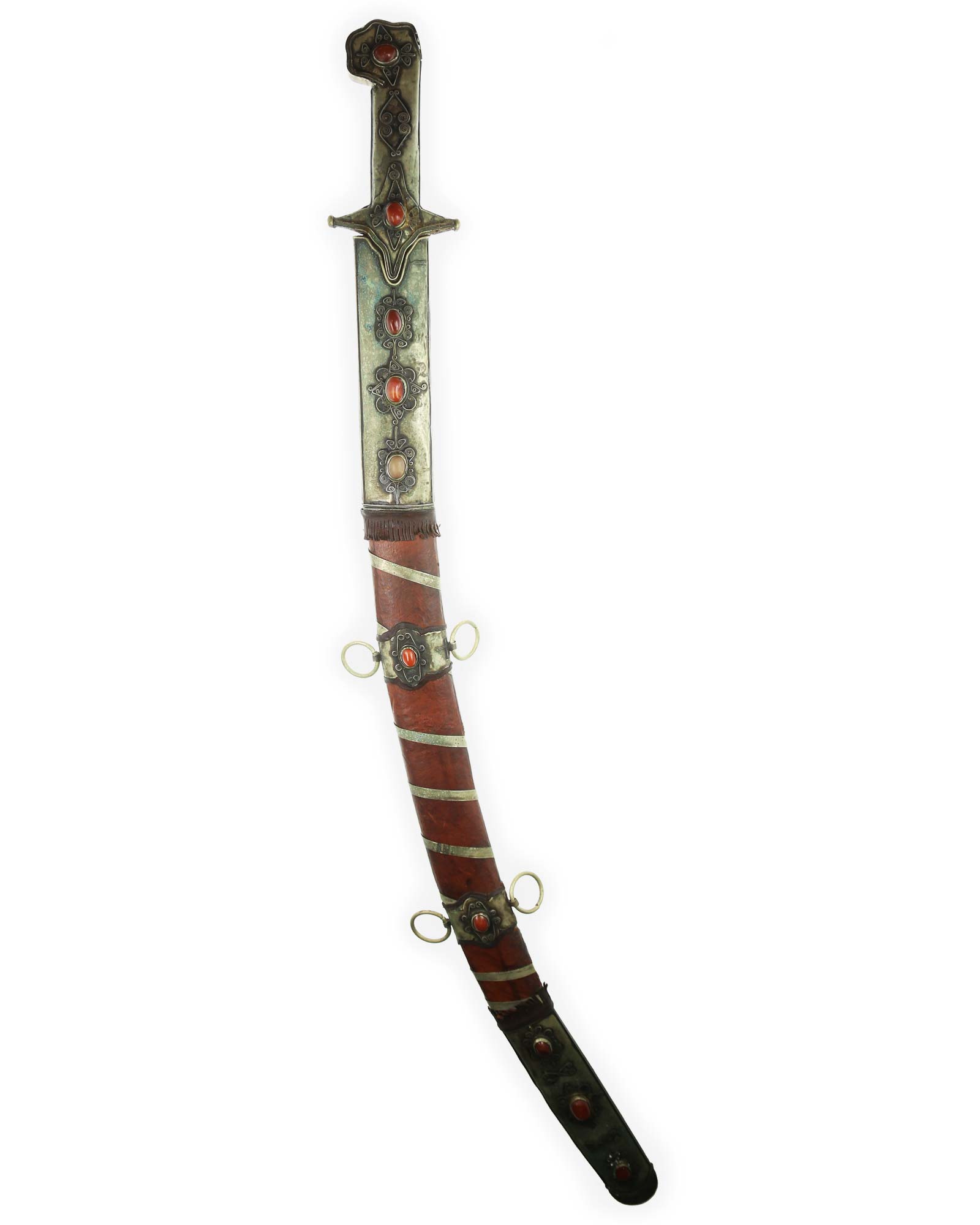
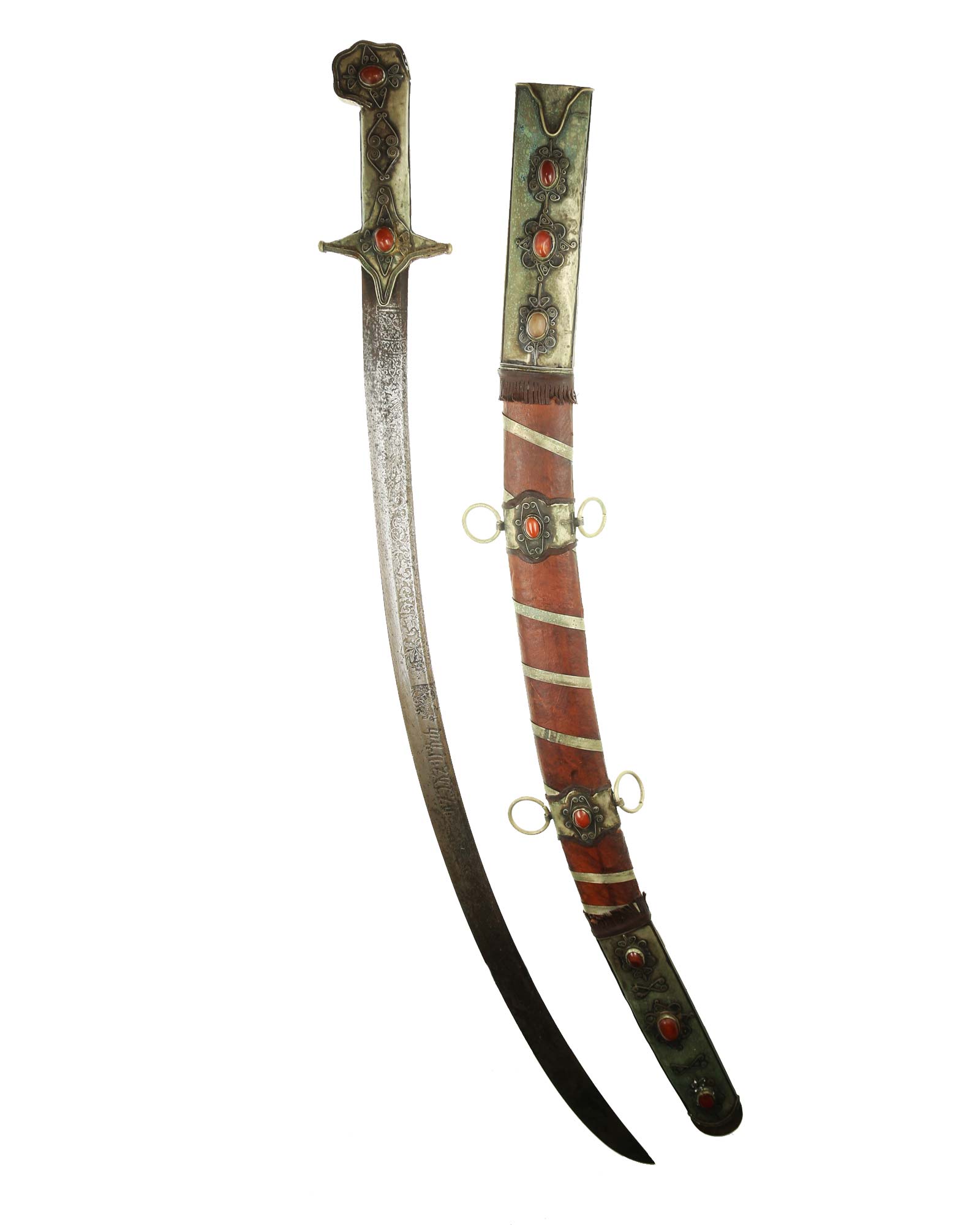
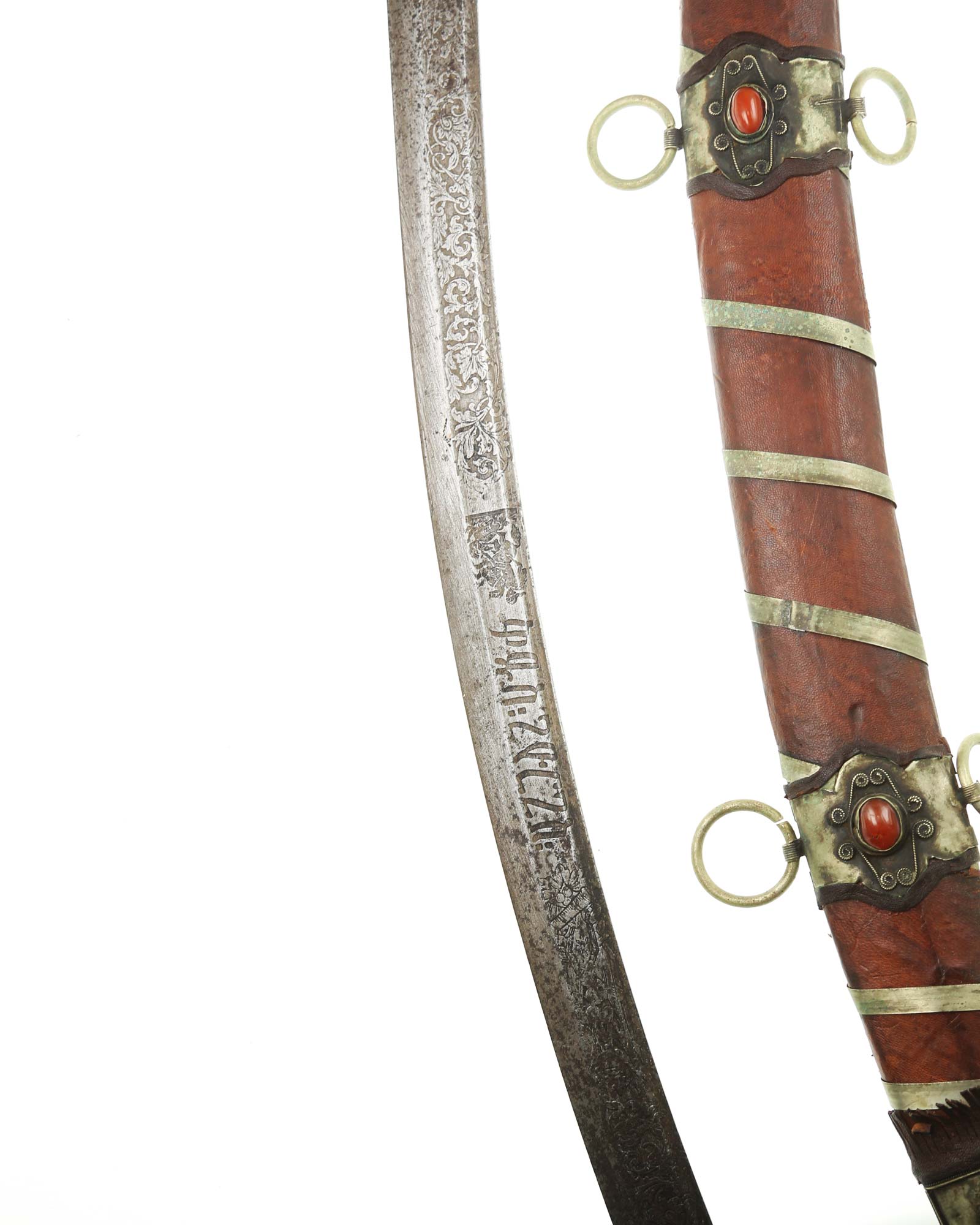
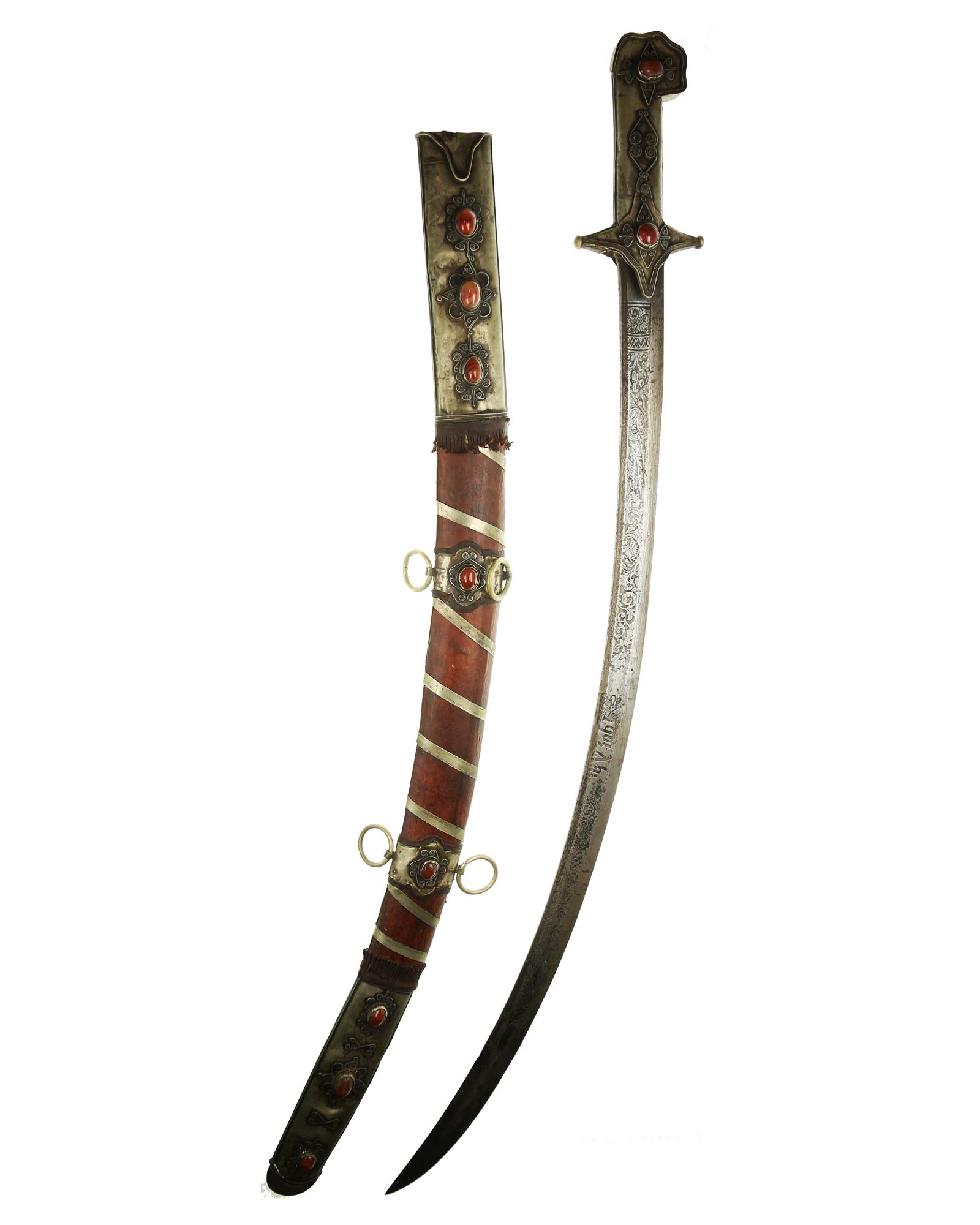
Persian Shamshir sabre, likely dating to the 18th century, with etched decoration on both sides. The strongly curved blade shows the elegant line typical of this sabre form, with a pronounced back section and a double-edged tip. Beneath the crossguard there is a mark or initial, readable approximately as “GG” or “GC”.
Grip: Metal-mounted grip with inset red to orange cabochons. A reliable identification of the stones is not possible without gemmological examination; by visual impression, the inserts appear more like reddish-orange stones, possibly in the direction of carnelian / agate. No obvious signs of replacement are visible externally. The metal parts are non-magnetic.
Blade: Steel blade with etched decoration on both sides over large areas. The decoration consists of ornamental motifs and script characters. No damascus pattern is visible; rather, this is a steel blade with decorative etching. Corrosion traces caused by age and storage are present, more pronounced in some areas.
Scabbard: Wooden scabbard with leather covering and non-magnetic metal fittings. The fittings repeat the design language of the grip with corresponding cabochon-style inserts. Overall, age-related and usage-related traces are present.
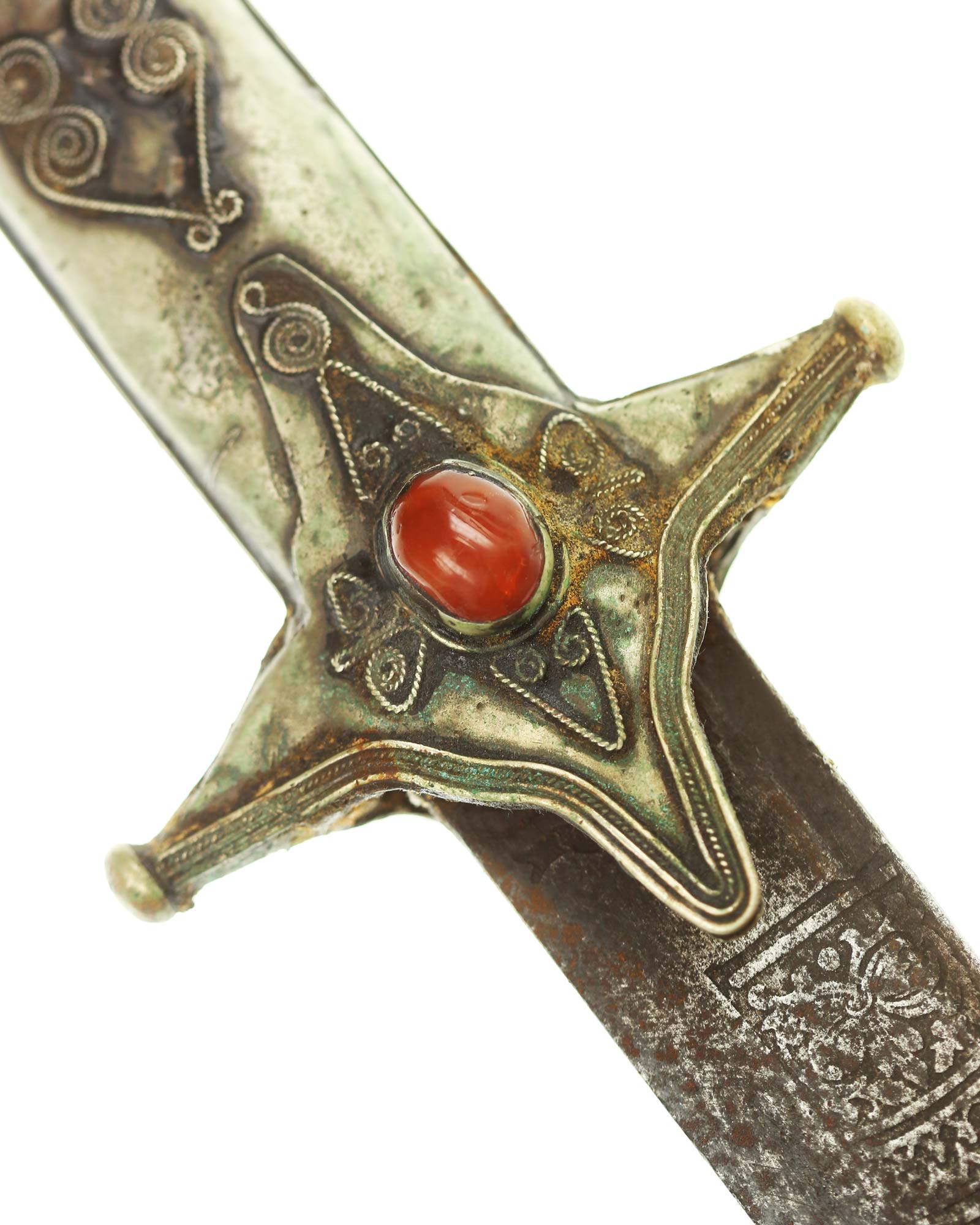
Historical Context: Persian Shamshir sabre
The Shamshir is among the best-known sabre forms of the Persian and, more broadly, Oriental cultural sphere. Its characteristic feature is the strongly curved, slender blade, primarily designed for drawing cuts and clearly distinct from straighter European blade forms.
Pieces of this type were produced over long periods and influenced numerous sabre forms in neighboring regions. Examples with ornamental etching, inscriptions, and elaborately designed grip and scabbard fittings are especially appreciated, as they emphasize not only the weapon form itself but also the decorative and representative character of such pieces.
With historical Oriental edged weapons, a careful and factual description is important. Material identifications of stone inlays, exact dating of individual mounts, or possible later additions can often only be clarified with certainty through further specialist examination. Regardless of that, an old Shamshir with etched blade, matching scabbard, and coherent overall appearance holds strong collector appeal.
Review(s)
![Late Luftwaffe Officer Sword [M1937] with expertise and etching on both sides](https://www.dg.de/media/images/product/thumb/luftwaffe-fliegerschwert-1935-offiziere-aetzung-3824-1.jpg)


 Exclusive offers 10 € voucher when you sign up to our newsletter.


