


Maker
Weyersberg Paul & Co., Solingen
Model
M1938 - 2. Modell
Blade
double-edged
Length
375 mm
Weight
453 g
Hanger
without
Condition
EXC+
RLB Leader Dagger [M1938] 2nd Model – Paul Weyersberg & Co., Solingen
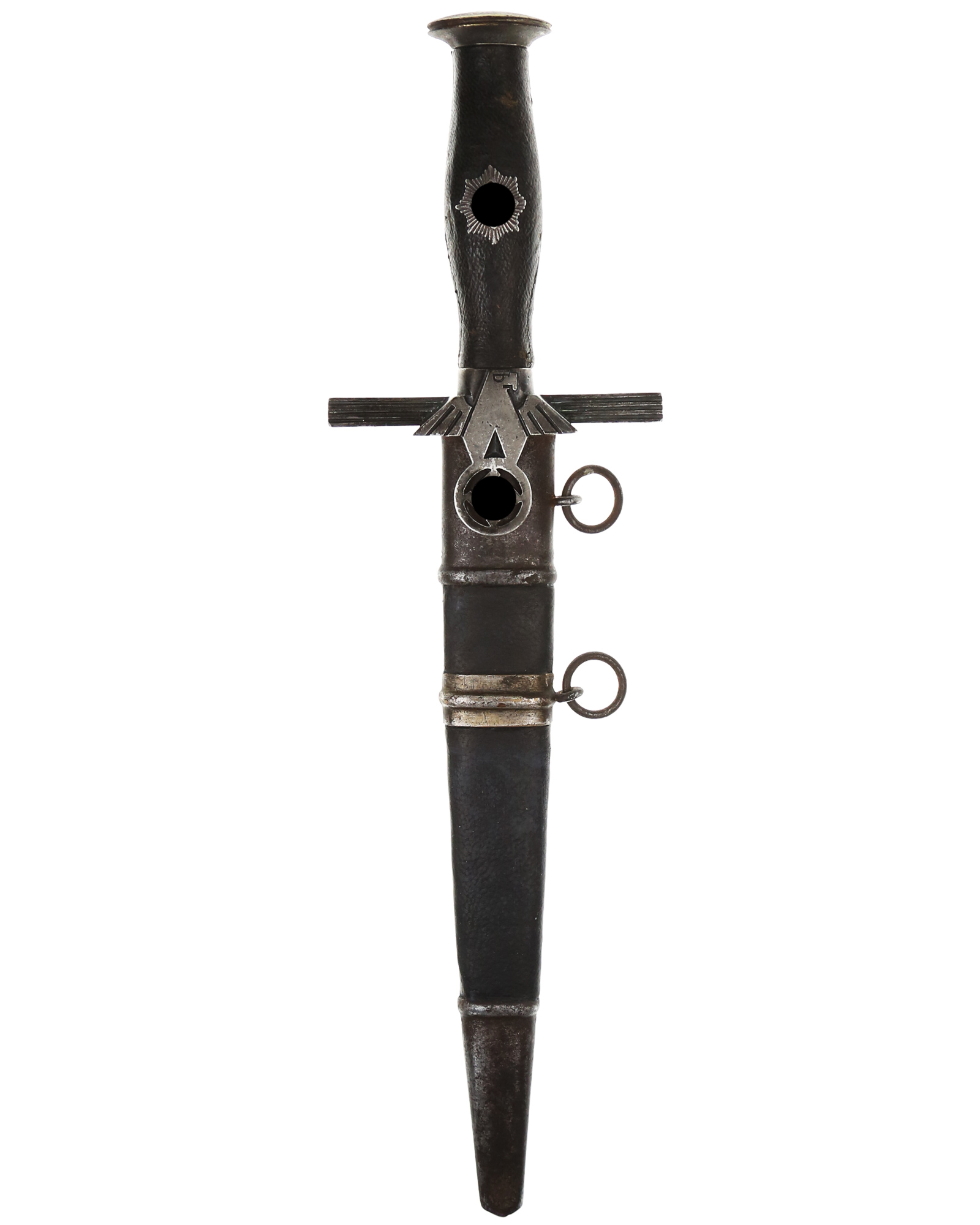
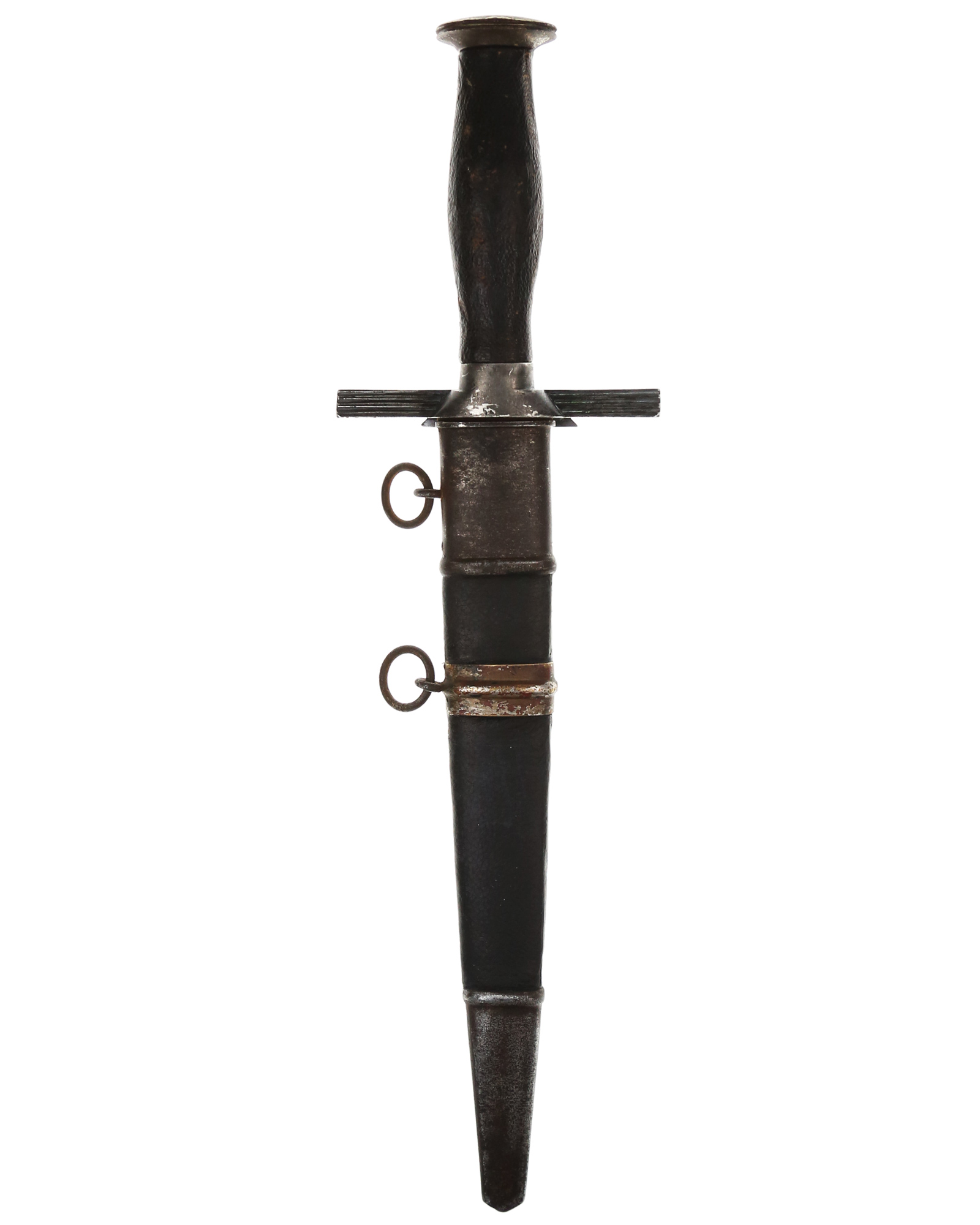
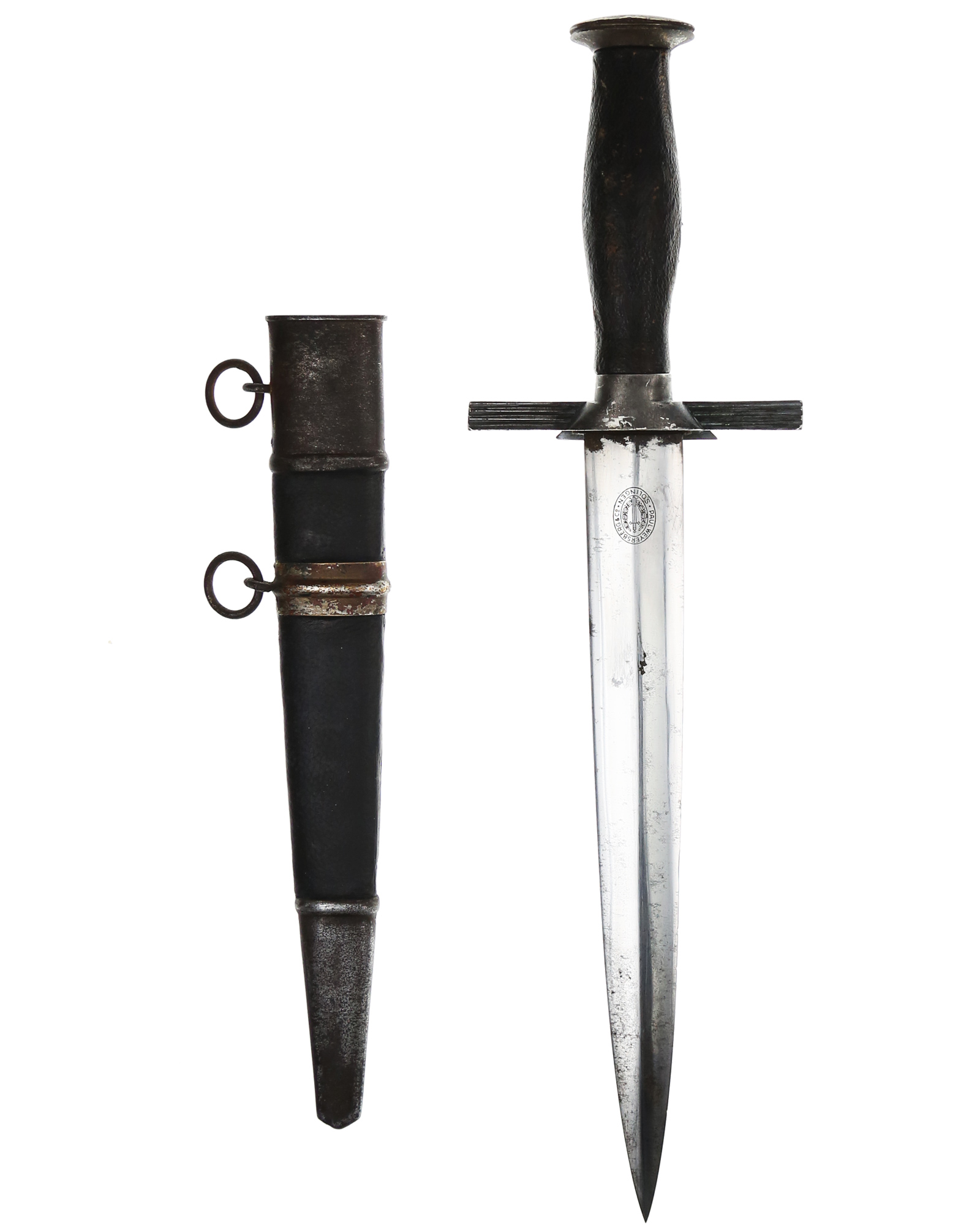
Original RLB Leader Dagger (M1938) – 2nd Model of the Reichsluftschutzbund (RLB), introduced in 1938, manufactured by Paul Weyersberg & Co., Solingen. The dagger is preserved in an uncleaned condition with visible patina and age-related traces, as commonly encountered on period pieces.
Grip: Wood-based grip covered in leather, fitted with the applied RLB star and enamelled emblem. The crossguard is straight with grooved side panels; the center features the RLB eagle facing to the right, grasping a pierced emblem in its talons. The original leather blade buffer is present beneath the crossguard. The dagger is secured by the screw-mounted pommel at the top of the grip.
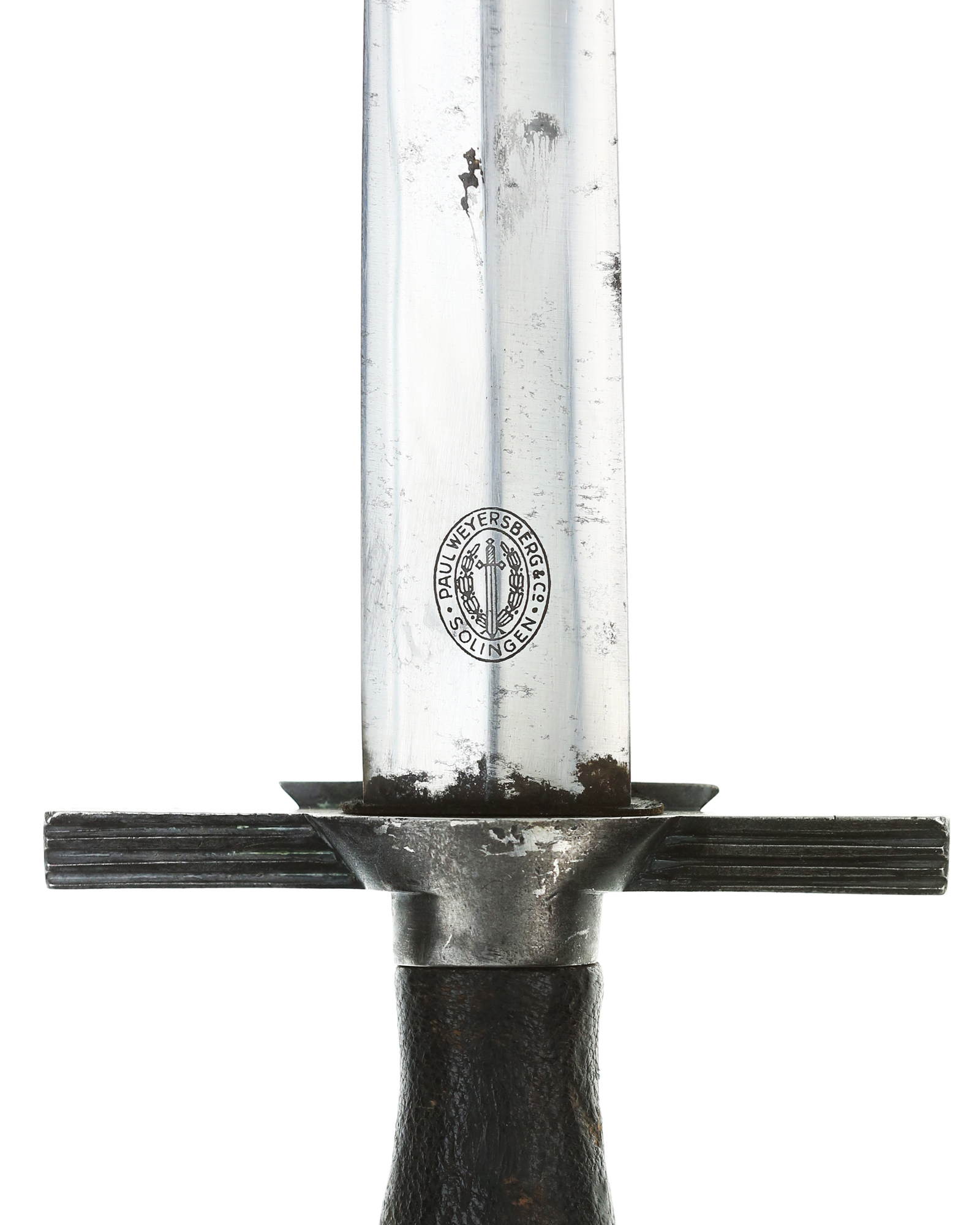
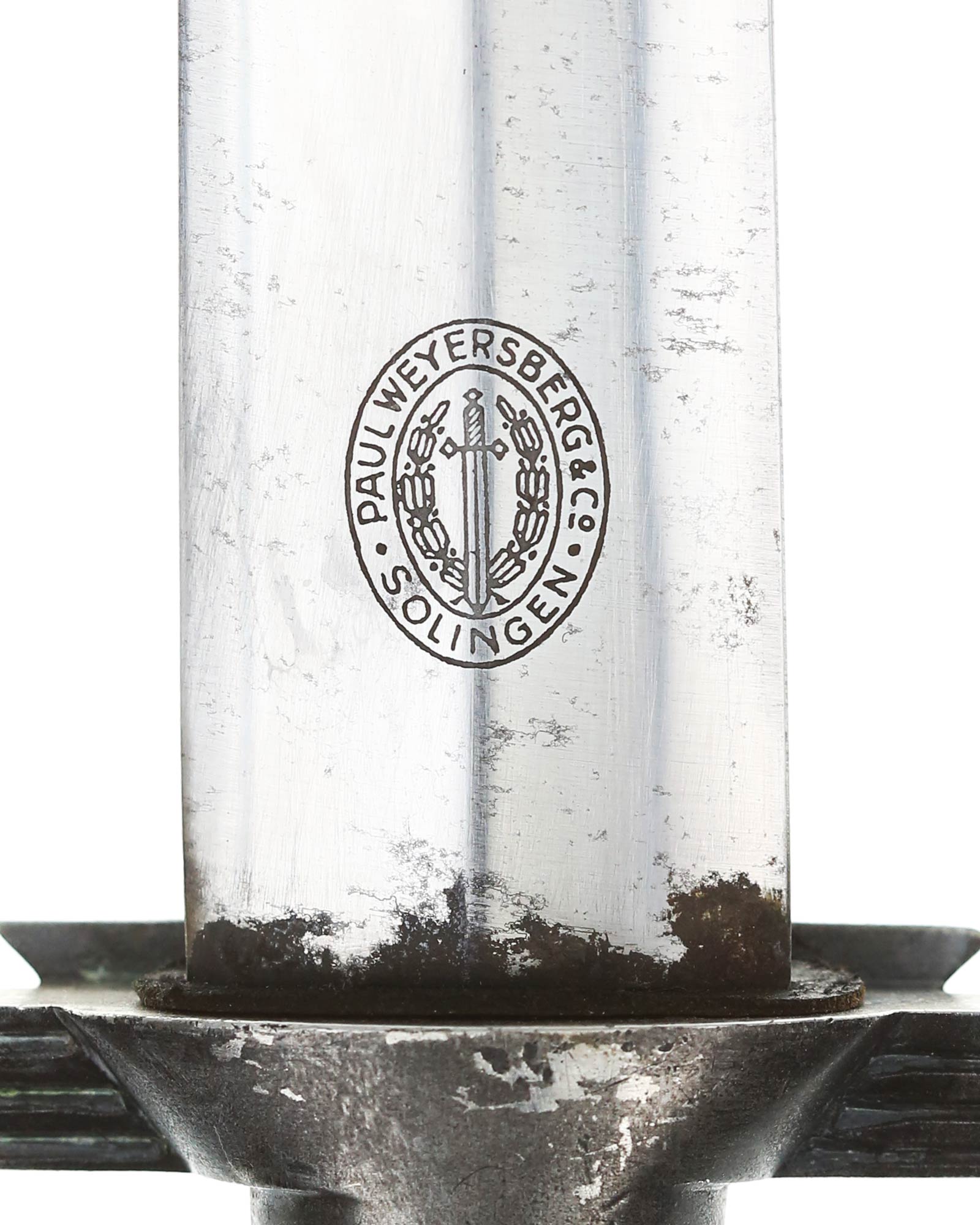
Blade: Blade in uncleaned condition with light spotting and period-consistent surface appearance. The reverse shows the maker marking “Paul Weyersberg & Co., Solingen”. The shoulders fit flush and without any gap to the crossguard, indicating a coherent assembly.
Scabbard: Steel scabbard covered with leather, with the leather covering replaced. The scabbard is straight and shows no dents or deformation. The mounts are nickel-plated sheet steel and remain uncleaned with patinated surfaces, each retained by two side screws. Two upper mounts are fitted with hanging rings, which are fully closed.
Historical Classification: RLB Leader Dagger (M1938) – 2nd Model
The Reichsluftschutzbund (RLB) was an organization involved in state-directed civil air protection, focusing on training, organization and the promotion of protective measures. The Model 1938 Leader Dagger was introduced as a representative sidearm and is recognizable by its period design features of grip, crossguard and emblems.
The 2nd Model is defined by certain construction and production characteristics. Makers such as Paul Weyersberg & Co., Solingen are well-known Solingen producers of edged weapons, and their blade marks are important for collector classification.
Period pieces preserved in uncleaned condition with patina can be particularly informative, as surfaces, fit and manufacturing details remain visible without later alteration. Notes such as a replaced leather covering on the scabbard are part of transparent condition reporting and contribute to an informed assessment of the complete set.
Review(s)
![RLB EM Dagger [M1936] by SMF Solingen](https://www.dg.de/media/images/product/thumb/rlb-dolch-dagger-unterfuehrer-1936-smf-solingen-4061-1.jpg)


 Exclusive offers 10 € voucher when you sign up to our newsletter.


