


Maker
Weyersberg Kirschbaum & Cie. WKC
Model
M1935
Blade
double-edged
Length
404 mm
Weight
416 g
Condition
EXC+
Army Officer’s Dagger [M1935] with Hangers – WKC Solingen
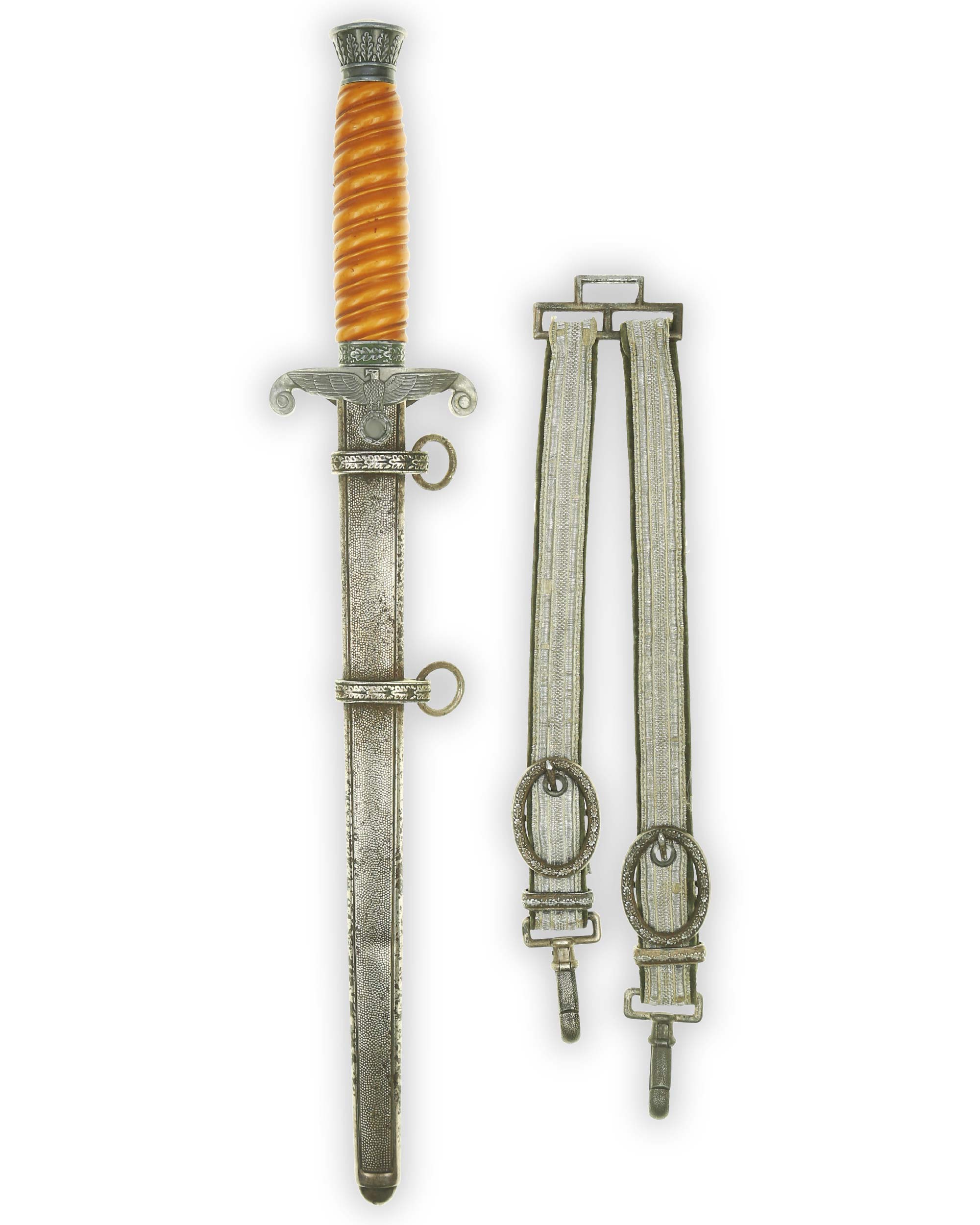
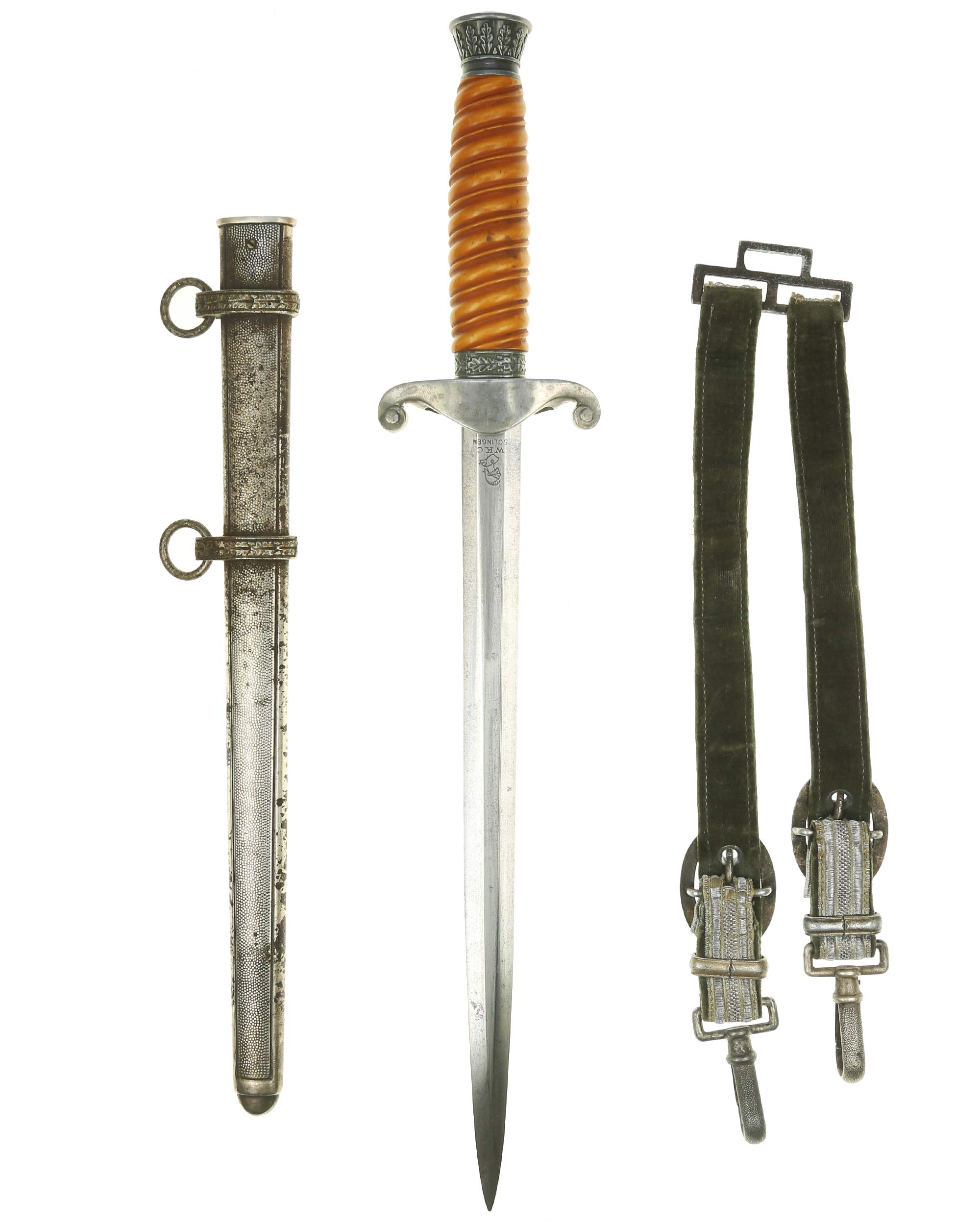
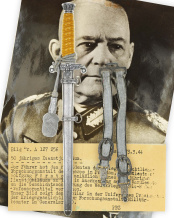
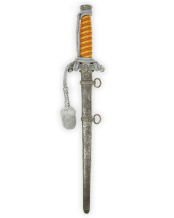
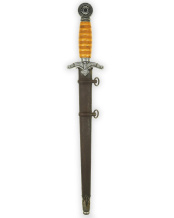
Army Officer’s Dagger Model 1935 with two-piece hangers, manufactured by WKC – Weyersberg, Kirschbaum & Cie., Solingen. The dagger features an orange-colored, spirally fluted grip, a hilt decorated with oak leaves and a double-edged blade bearing the maker’s mark “WKC SOLINGEN” with the characteristic knight’s helmet logo. The textured metal scabbard and two-piece Army officer’s hangers are present. The overall length is approximately 404 mm, with a weight of approximately 416 g according to the article specifications.
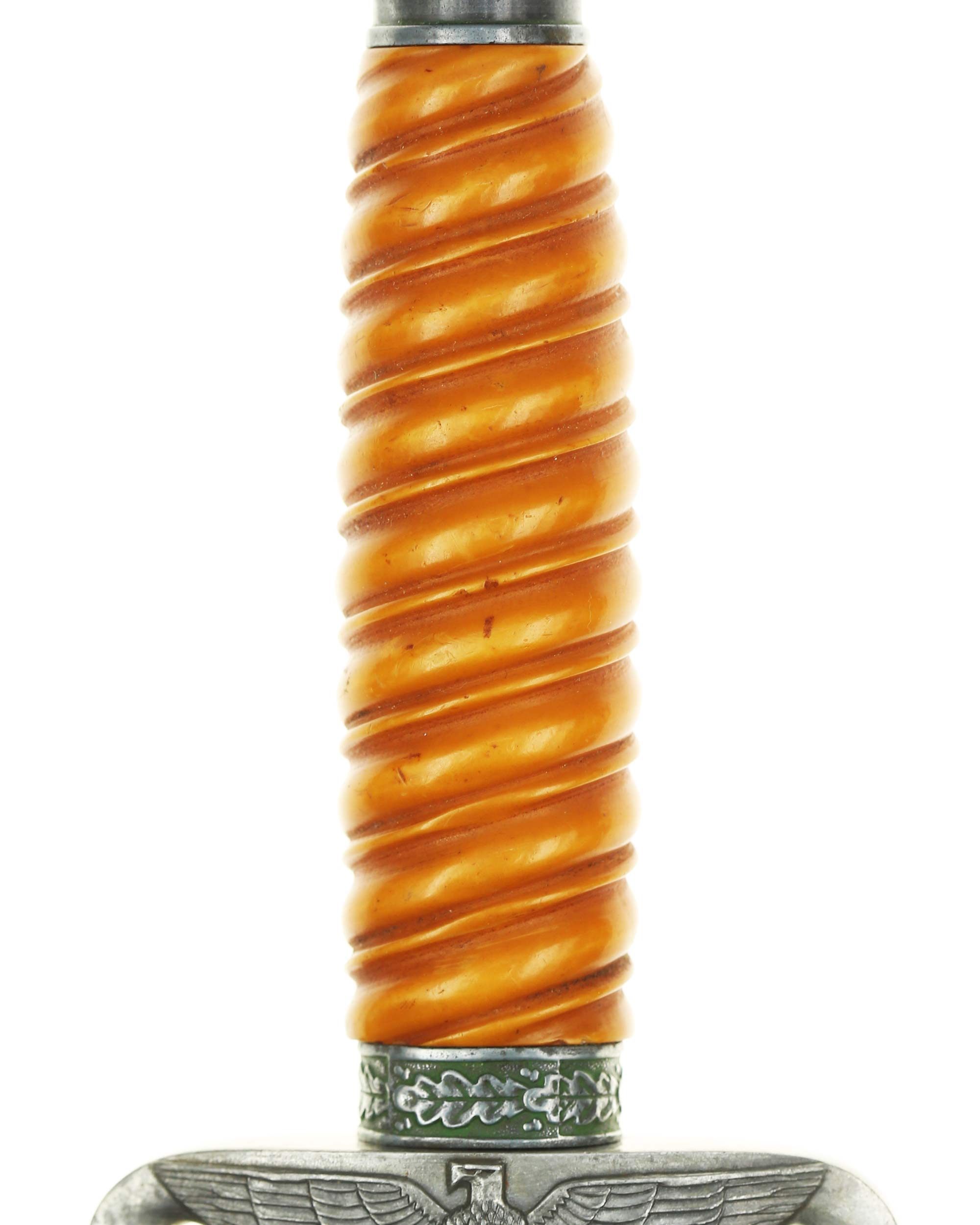
Grip & Hilt: Orange-colored grip with pronounced, spirally arranged and convex flutes. The conical pommel is decorated with a continuous oak leaf pattern. An oak leaf-decorated grip ring is positioned at the lower end of the grip. The silver-colored crossguard is shaped as a left-facing Army eagle with wings curving downward at the sides. The eagle holds a wreath containing a swastika in its talons. The grip shows minor age-related surface traces and areas of discoloration. The metal fittings display age-related patina and areas of wear.
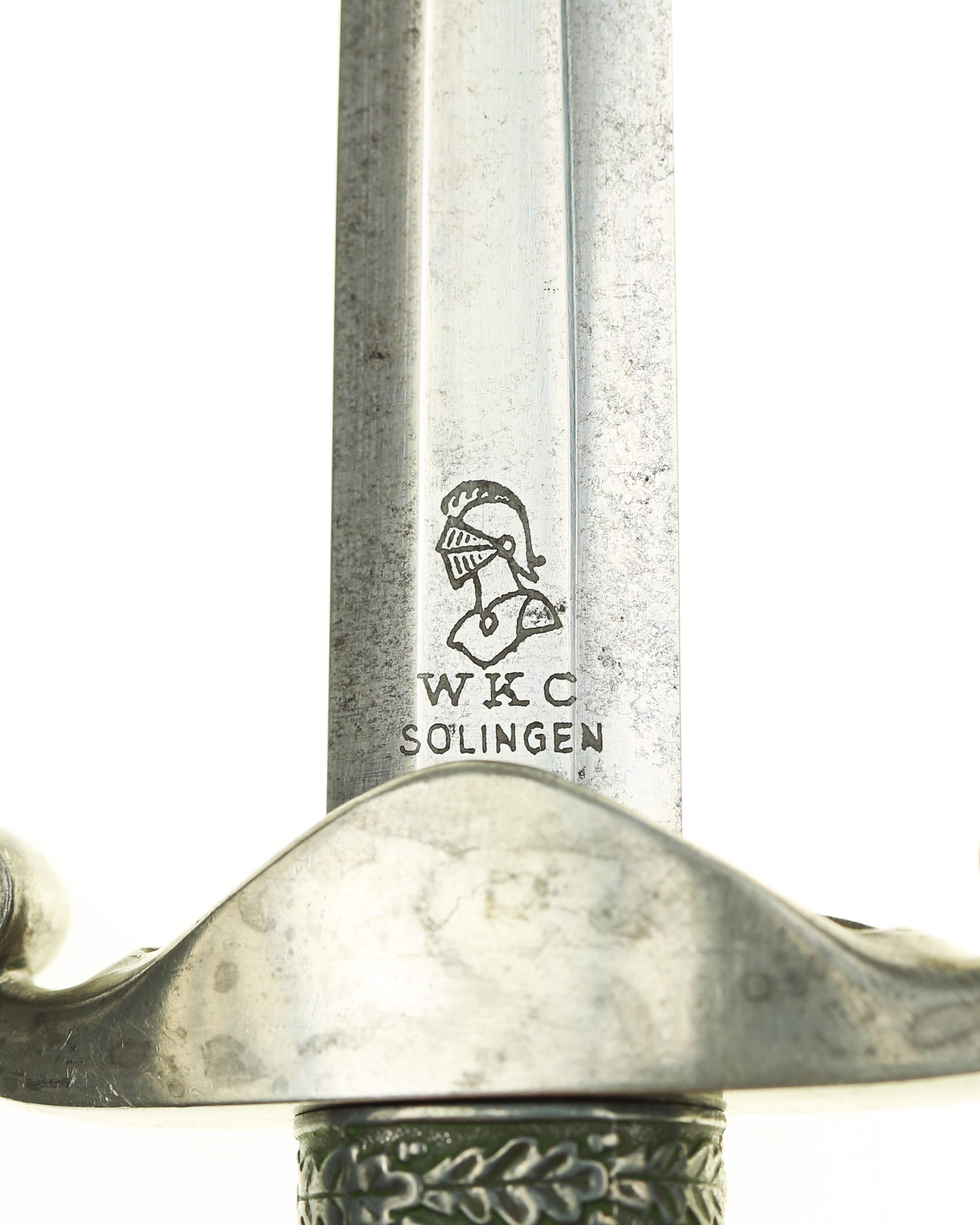
Blade: Bright, double-edged blade with a flat central section and bevels on both sides. The reverse bears the maker’s mark “WKC SOLINGEN” with the knight’s helmet logo positioned above the lettering. The marking remains clearly legible. The blade surface shows age- and scabbard-related traces, including minor areas of oxidation and tarnishing.
Scabbard: Metal scabbard made of drawn sheet steel, with a textured surface on both sides. Both scabbard bands are decorated with oak leaf motifs and each fitted with a closed, movable suspension ring. The scabbard tip is rounded. The metal surfaces show age-related patina, areas of darker discoloration and surface wear. The textured surfaces in particular display noticeable age- and use-related changes.
Hangers: Two-piece Army officer’s hangers with silver-colored textile on the front and dark backing. Both suspension straps feature decorated metal fittings, oval adjustment slides and snap clips for attachment to the suspension rings on the scabbard. The metal fittings show age-related patina and areas of discoloration. The textile and backing materials display age- and wear-related traces. No portepee is present.
Condition: Overall condition 2. The orange-colored grip, hilt, double-edged blade with WKC maker’s mark, metal scabbard and two-piece hangers are preserved. The grip shows minor age-related surface traces. The blade displays fine signs of use and areas of discoloration. The hilt, scabbard and hanger fittings show patina, wear and age-related surface changes. The two-piece hangers are complete with both suspension straps; no portepee is included. Further details of the condition are documented in the photographs.
Historical Background: Army Officer’s Dagger Model 1935 – WKC Solingen
The Army Officer’s Dagger Model 1935 was introduced in 1935 as part of the uniform equipment of German Army officers. It was worn with certain service and dress uniforms and served as a ceremonial sidearm.
Characteristic features of this model include the fluted grip, conical pommel with oak leaf decoration, eagle-shaped crossguard and double-edged blade. The corresponding metal scabbard generally has a textured surface and two oak leaf-decorated bands with movable suspension rings.
Army officer dagger grips were produced in various light colors. In addition to white and ivory-colored examples, yellowish and orange-colored versions are known. The coloration could change as the grip material aged. The present example features a distinctly orange-colored grip with spiral flutes.
Weyersberg, Kirschbaum & Cie. (WKC), Solingen was among the Solingen manufacturers of military edged weapons. The company used various maker’s marks, including the characteristic knight’s helmet logo with the letters WKC. A corresponding marking with the inscription “WKC SOLINGEN” is present on the blade of this dagger.
The dagger was carried using two-piece hangers. The suspension straps were equipped with adjustable metal fittings and snap clips for attachment to the scabbard rings. Army officer’s daggers could also be fitted with a portepee. The present example includes the two-piece hangers but no portepee.
The dagger described here, with its WKC maker’s mark, orange-colored grip, textured metal scabbard and two-piece hangers, is documented as a historical edged weapon and period collector’s object. The description serves to record its model, manufacturer, accessories and condition.
Review(s)





 Exclusive offers 10 € voucher when you sign up to our newsletter.


